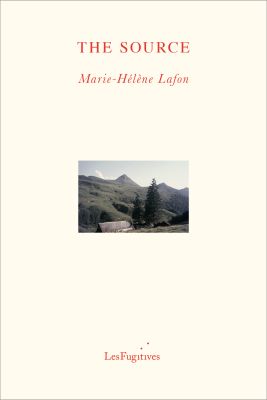
Set around a large, isolated farmhouse in the Cantal, a rural, mountainous region of the Auvergne in France, The Source offers three time periods: June 1967 after the Six-Day War, May 1974, and October 2021; three voices: a thirty year-old mother of three, her husband, and, in the final section, their second daughter, now nearing sixty. In the first and longest section, tension dramatically mounts as the wife suffers her husband's mistreatment, remembers the time before her marriage, and describes her growing alienation, until against all hopes she decides to stay at her parents with her three young children, never to return to the family home. The husband's account, seven years later, is marked by a complete absence of remorse and combines hatred of his wife and a description of his dogged ambition and hard work, together with his faith in his teenage daughters' future through higher education (he rejects his son, whom he finds too soft), as well as portraits of the harshness of rural, agricultural work, the changing political landscape, and the evolution of French farming. Through internal focalization, Lafon builds a fascinating picture of a rural family devastated by the violence of an uneducated, ambitious, loathsome man, yet her story ends with an unexpected glimmer of hope, a promise of freedom.