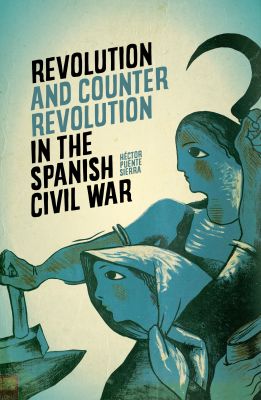
Ninety years ago, a military coup led by far-right generals was launched to crush Spain's parliamentary republic. It would lead to civil war - and revolution, as workers rose up in arms and fought for a new world. The war and the revolution were the culmination of years of struggles, where a rapidly expanding working class and the forces of reaction tested their strength. Written form a Marxist perspective, this new history of Spanish Civil War aims to uncover the deep class tensions that led to this explosion and shaped its course. Hector Puente Sierra argues that the revolution offered the only road to a military victory over Franco. Instead, a counterrevolution within the Republic - driven forward by the middle class Republican forces, the Socialist Party and crucially, the Stalinist Communist Party, shattered that potential. This sealed the fate of the Republic and led inexorably to Franco's victory - and the establishment of an authoritarian Catholic dictatorship that would rule Spain until the late 1970s. Sierra recovers the often overlooked story of the revolution that unfolded in 1936-1937. He examines the pivotal role played by Spain's colonial relationship with Morrocco; he examines the strengths and ultimate failures of anarchism; he looks at the role of women in the revolution and war and the part played by the 'dissident' anti-Stalinist Marxist party, POUM. Sierra also reflects on the nature of Franco's 'war of extermination' against the left and workers - with its ominous echoes in today's far right.