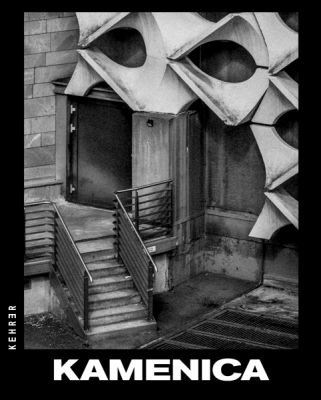
Chemnitz is the European Capital of Culture 2025 and has undergone a remarkable urban transformation: once a symbol of industrial strength and a flourishing textile city, it transformed into the socialist Karl-Marx-Stadt, where individual freedom was heavily restricted. After the reunification, Chemnitz blossomed into new glory, finding creative forms of expression and developing a vibrant cultural scene. Today, the third-largest city in Saxony shines as a pulsating place of innovation and community, with its long history impressively reflected in its urban landscape. KAMENICA. A Portrait of Chemnitz is a personal homage to Chemnitz, illustrating Glatz's close connection to the city and his intense engagement with it. The photographer chooses the old Sorbian name Kamenica for his portrait of the city, thereby referencing the long history of Chemnitz. To gain a comprehensive understanding of the city, the German photographer engaged in conversations with residents and immersed himself in literature and podcasts. With his camera, he explored the Saxon metropolis often from early morning until late at night. Glatz's black-and-white photographs strikingly capture the contrasts between past and present. His visual narratives focus on both iconic buildings and hidden corners of the city. He patiently reveals the diverse architectural layers and presents Chemnitz in all its diversity - from the Grunderzeit to socialist modernism and contemporary architecture. Glatz particularly highlights the breaks and transitions in the urban landscape, creating a profoundly insightful and multifaceted cultural portrait of the city. KAMENICA. A Portrait of Chemnitz is a deeply captivating work that takes the reader on an emotional journey through the tumultuous history of the Capital of Culture 2025 and provides a deep insight into present-day Chemnitz - a city in transition, proud of its history and boldly forging new paths. The series of works was created as part of the HALLENKUNST Artist in Residence program.