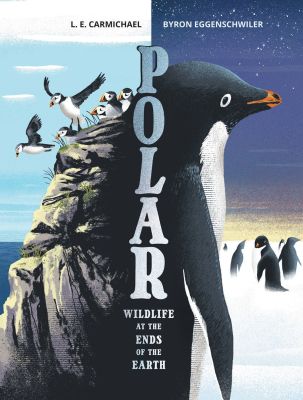
The Arctic and Antarctica, at opposite ends of the Earth, have much in common: bitter cold, ferocious winds and darkness lasting six months. Despite these harsh conditions, many animals have adapted to stay alive in the polar regions. This evocative and beautifully illustrated book from the award-winning team of author L. E. Carmichael and illustrator Byron Eggenschwiler explores how animals at opposite ends of the Earth survive using similar adaptations. There's the arctic fox who is protected from the ice by the fur on the soles of her feet, the emperor penguins huddling in groups around their chicks to keep everyone warm, and the narwhal using echolocation to find a crack in the surface ice to breathe. It's a fascinating journey through a year in the polar regions, where animals don't just survive - they thrive! Each spread in the book is devoted to a month and includes a themed introduction and two stories on opposites pages, one about an animal in the Arctic and one about an animal in Antarctica. Extra spreads cover topics such as seasons, winter weather and types of ice. The book concludes with a timely description of the disruptions that climate change is causing to the polar regions, and how this will have global consequences. A glossary, further reading, author's sources, an index and ideas for what children can do to help are included. There are strong life science curriculum applications here in animal habitats and animal adaptation, migration, hibernation and cooperation.